Tables & desks
Round or rectangular? Choosing a dining table shape
Compare table shapes by the room, the seats you use every day and the way chairs move, rather than by appearance alone.
By Homora Team · Published
The short answer
Should you choose a round or rectangular dining table?
Choose the table shape that leaves enough usable space for chairs and everyday movement in your actual room. Compare the full dimensions, leg or pedestal position and occupied chair footprint. Mark both shapes on the floor before deciding; a round table is not automatically the better choice for a small room.
Follow the shape of the room
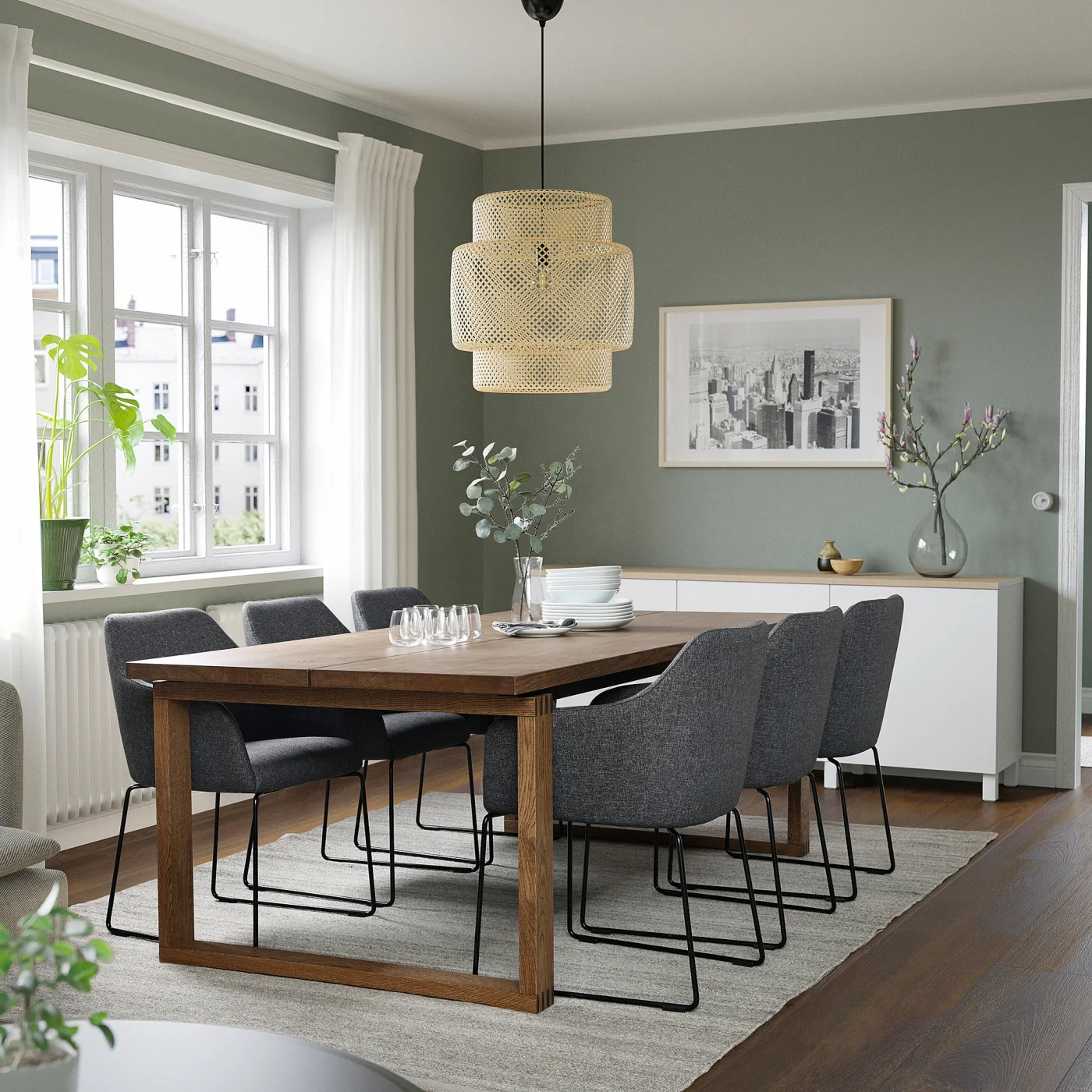
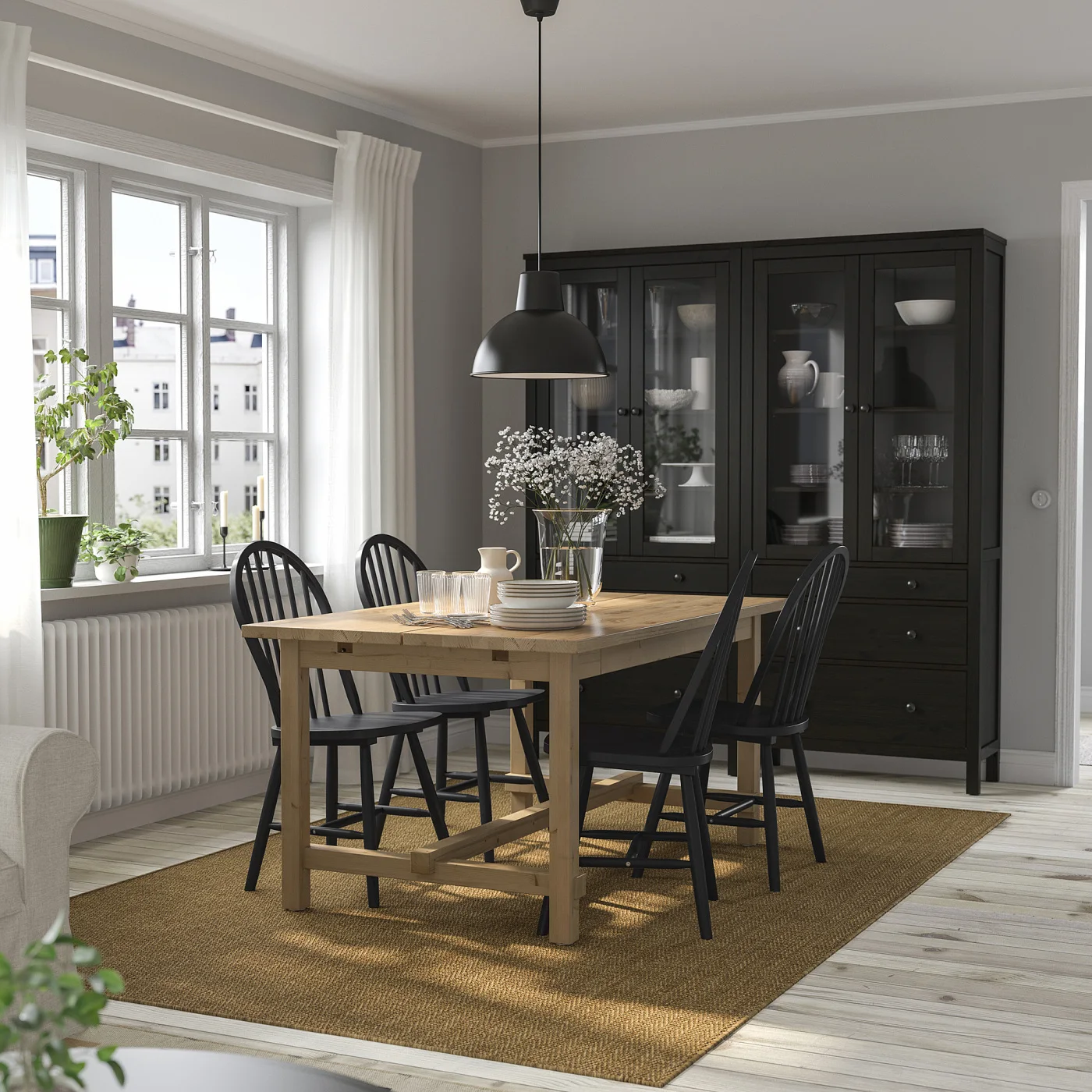
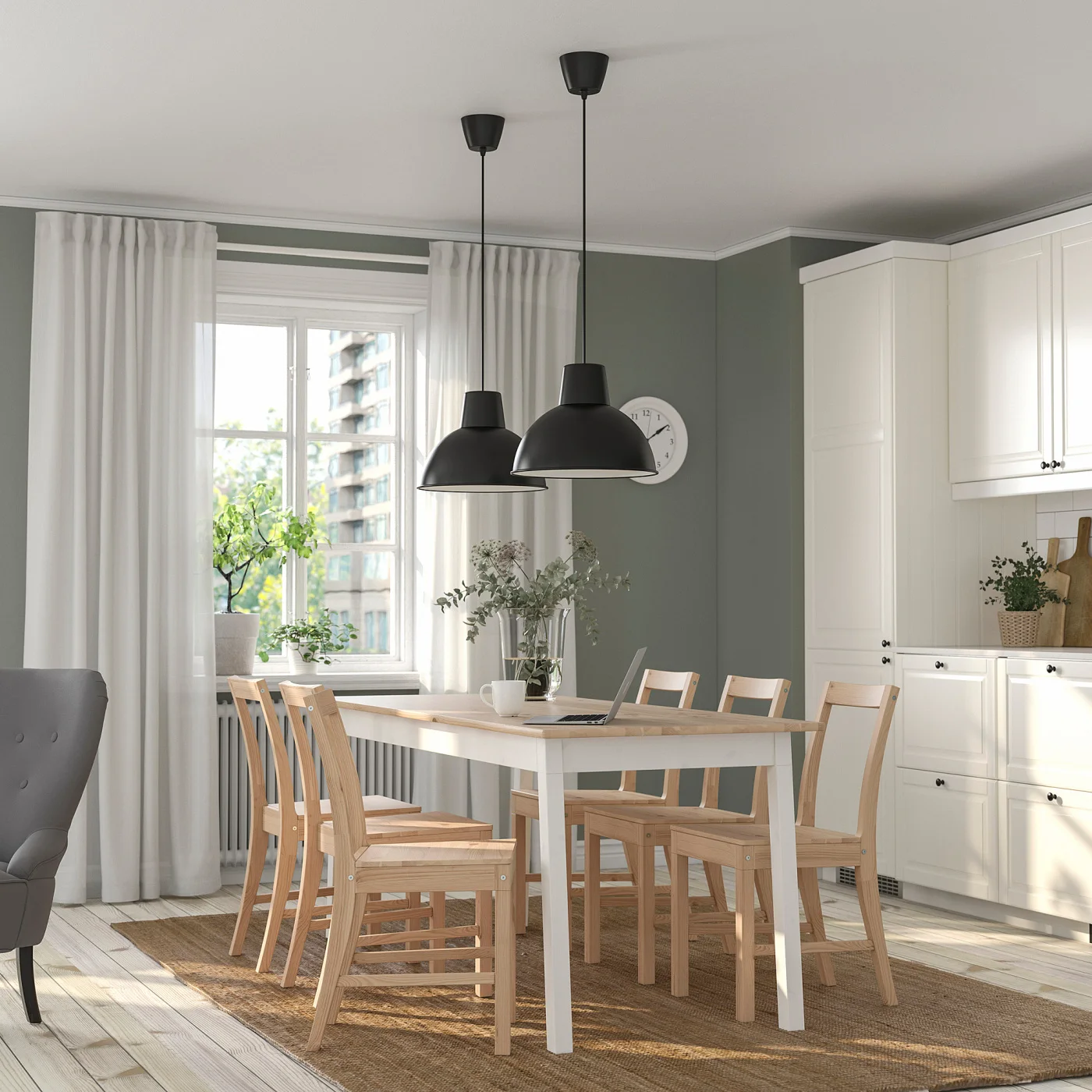
A rectangular table often works naturally in a longer dining area because it follows the room's direction. A round table can create a different arrangement in a squarer corner, especially when the seats need to face one another. Neither shape automatically saves space: compare the actual footprint and the chairs around it.
Draw the table and occupied chairs on your plan. Include the route to the kitchen, any sideboard and the door into the room. Check the narrowest point people will pass through, not just the space on the open side.
Count usable places
A stated seat count is a starting point. Chair width, table legs and the amount of space each person prefers can change how comfortable the arrangement feels. Check the distance between the legs as well as the tabletop size. An armchair may fit under the top yet collide with the apron below it.
For a pedestal design, look at where feet will rest. For a table with four legs, consider who will sit near the corners. Test your existing chairs against the dimensions before assuming a new table will accommodate them.
Think about the surface
A dining table may also hold homework, a laptop or a sewing project. Decide how much uninterrupted surface these tasks require and where the equipment goes when it is time to eat. A rectangular surface can offer a useful working edge; a round one can bring everyone closer to the centre.
Keep the finish and care instructions in the decision. The right shape does not compensate for a surface you find difficult to maintain. Check the retailer's guidance for heat, spills and cleaning before settling on a material.
Plan for occasional guests
Choose around daily use first. If you host occasionally, compare an extension table with an arrangement that uses an extra folding surface. Include the space needed to open the extension and store spare chairs. More seats matter only when the room can still function around them.
Before you decide
- Draw chairs in use, not tucked away.
- Check space between table legs.
- Test chair arms and apron clearance.
- Plan the route past an occupied table.