Tables & desks
Choose a desk for a small working corner
Build a desk setup around the equipment you use, your chair and the space needed to work, rather than the tabletop dimensions alone.
By Homora Team · Published
The short answer
How do you choose a desk for a small home office?
Start with the work you do and the equipment that must fit on the desk. Measure the available width and depth, then include the occupied chair, access to drawers, sockets and cable routes. Test the arrangement in the room and compare usable work surfaces rather than choosing only by the desk’s advertised size.
List what lives on the desk
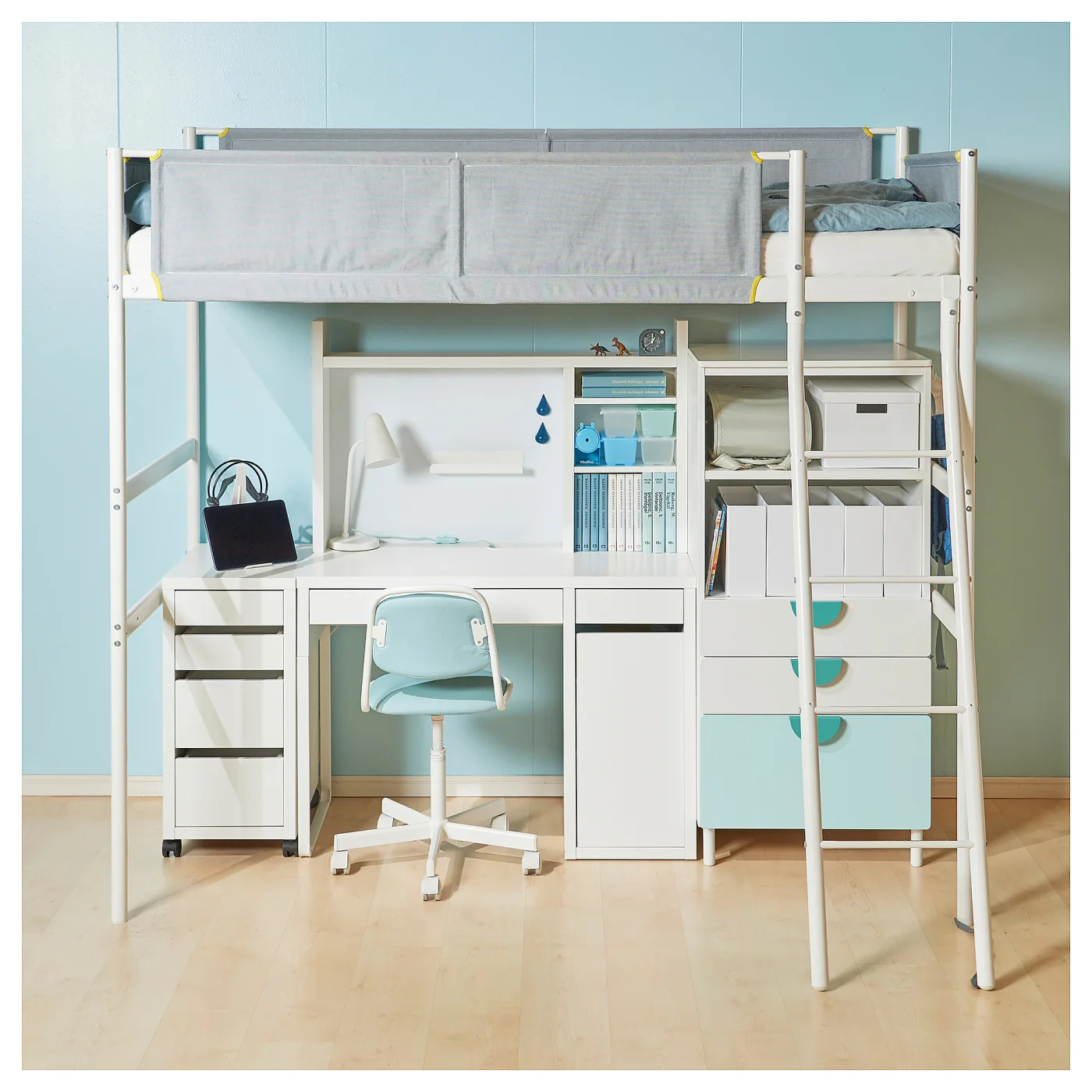
Start with your actual equipment: laptop, monitor, keyboard, notebook and any lamp. Lay it out on an existing surface and measure the area you use. Include space to move the mouse and somewhere to put a drink without placing it beside electrical equipment.
A compact desk can work well for occasional laptop use but be frustrating for work that needs paper and a separate screen. Prioritise the tasks you do repeatedly. Storage can move off the tabletop when you have an accessible shelf or drawer nearby.
Look beneath the surface
Compare the width between the desk legs and the space under drawers or a front apron. Check whether your chair can move in and whether your feet have an unobstructed place to rest. Product width alone does not describe the usable area underneath.
Make the chair part of the floor plan. You need room to sit down, turn and stand up, as well as to tuck it away. In a shared room, test the walking route while someone is actually seated at the desk.
Plan power and cables
Map the sockets and the cables your equipment needs. Check whether cable openings are accessible when the desk sits against a wall. Keep the route clear of chair wheels and follow the equipment maker's instructions for power supplies and ventilation.
If you want a monitor arm, confirm the desk supports that mounting method and load. Lightweight or hollow-core tops may have specific restrictions. Do not assume a clamp is suitable because it physically fits over the edge.
Make clearing up easy
Decide what gets put away at the end of the day. A shallow drawer, separate organiser or nearby box can free the surface without requiring a larger desk. Keep frequently used items close and move occasional supplies elsewhere. A usable small workspace is one you can reset without shifting everything around the room.
Before you decide
- Measure a real equipment layout.
- Check leg and chair clearance.
- Verify monitor-mount restrictions.
- Plan sockets and an end-of-day reset.