Tables & desks
Solid wood, veneer and laminate: read the table details
Look beyond a wood-toned photograph. The construction and finish determine what care instructions to follow and which details to compare.
By Homora Team · Published
The short answer
What is the difference between solid wood, veneer and laminate tables?
Solid wood, wood veneer and laminate describe different constructions or finishes, so read the specification for each part of a table. A veneer is a wood surface layer over another material; a laminate is a manufactured surface layer. Check the top, edges and supporting structure separately, then follow the care instructions for that exact finish.
Read the parts separately
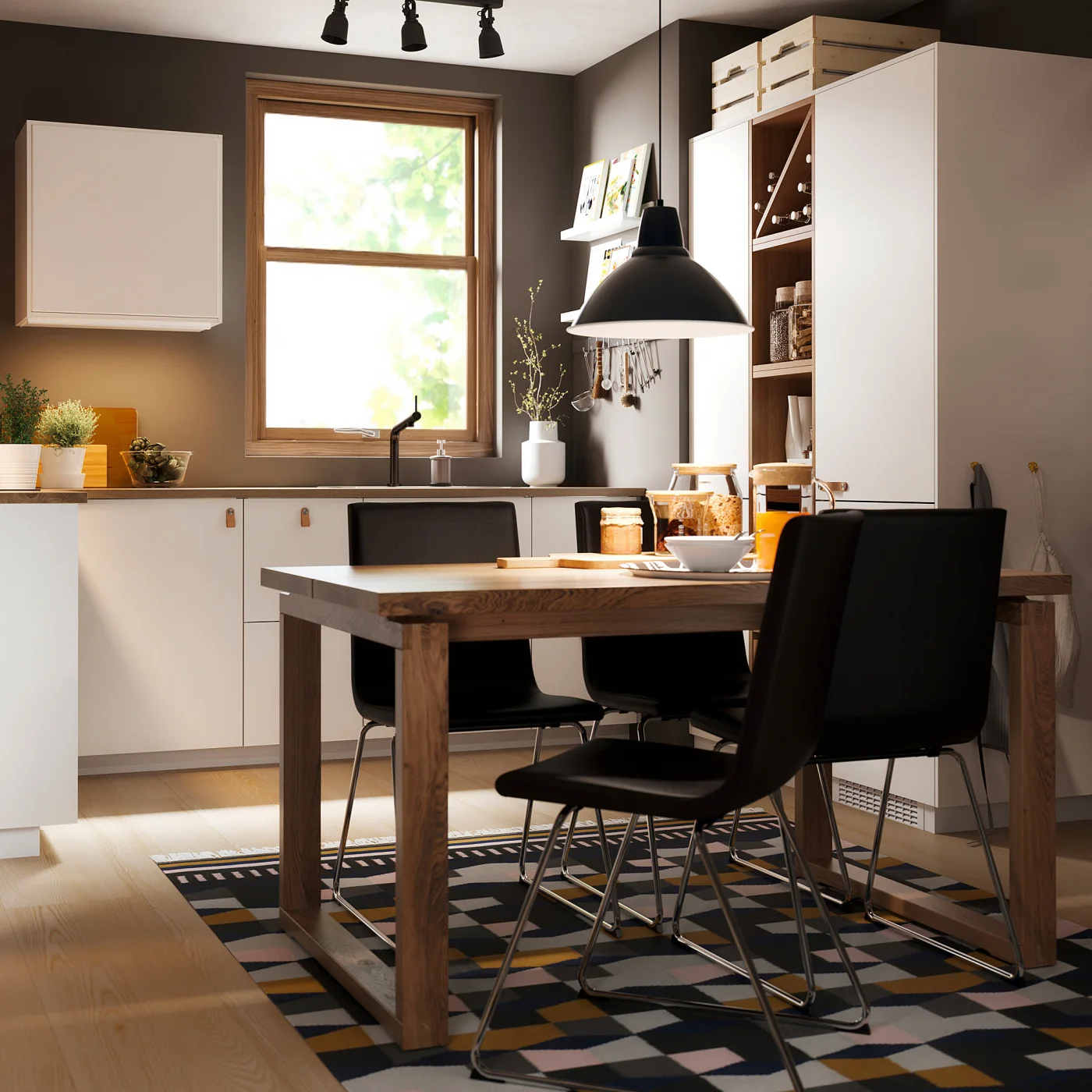
A table described as wooden may use different materials for its top, frame and legs. Read the component list rather than relying on the collection name. Solid wood, a wood veneer over a core, and a printed laminate surface are different constructions even when their colours look similar.
Keep the exact specification beside your shortlist. If the listing names only a finish, ask the retailer what is underneath it. An appearance label such as oak effect does not by itself confirm that the surface is oak wood.
Separate construction from finish
The material and the surface treatment answer different questions. A solid wood table can be painted, oiled or lacquered; a veneered table can also have a protective finish. Follow the instructions for the actual product instead of using a cleaning method intended for another table.
Ask about repair and refinishing before making these part of your buying rationale. A thin veneer or an engineered core may limit what can be sanded or altered. Obtain the manufacturer's advice rather than assuming every wood-looking top can be refinished.
Inspect edges and joints
Look for close-up photographs of the tabletop edge, corners and the join to the legs. These views often reveal details that disappear in a room photograph. Ask how the table is assembled and whether visible joins are part of the intended design.
Compare the finish in the lighting where the table will live. A sample, when the retailer offers one, is more useful for colour decisions than a phone screen. Natural grain and colour variation should be assessed as part of the particular product, not treated as a guaranteed match to another piece.
Choose for everyday use
Think about meals, work and cleaning habits. Check the guidance on moisture, heat and spills, and what surface protection is recommended. Compare the full cost and care routine. A preferred material is only a good choice when its requirements fit the way you use the room.
Before you decide
- Read the materials for top, frame and legs.
- Confirm the actual surface finish.
- Ask before planning repairs or refinishing.
- Compare close-ups and care instructions.